Friday, May 13, 2022

Skookum Falls, 2022


White River as seen from the Skookum Falls trail


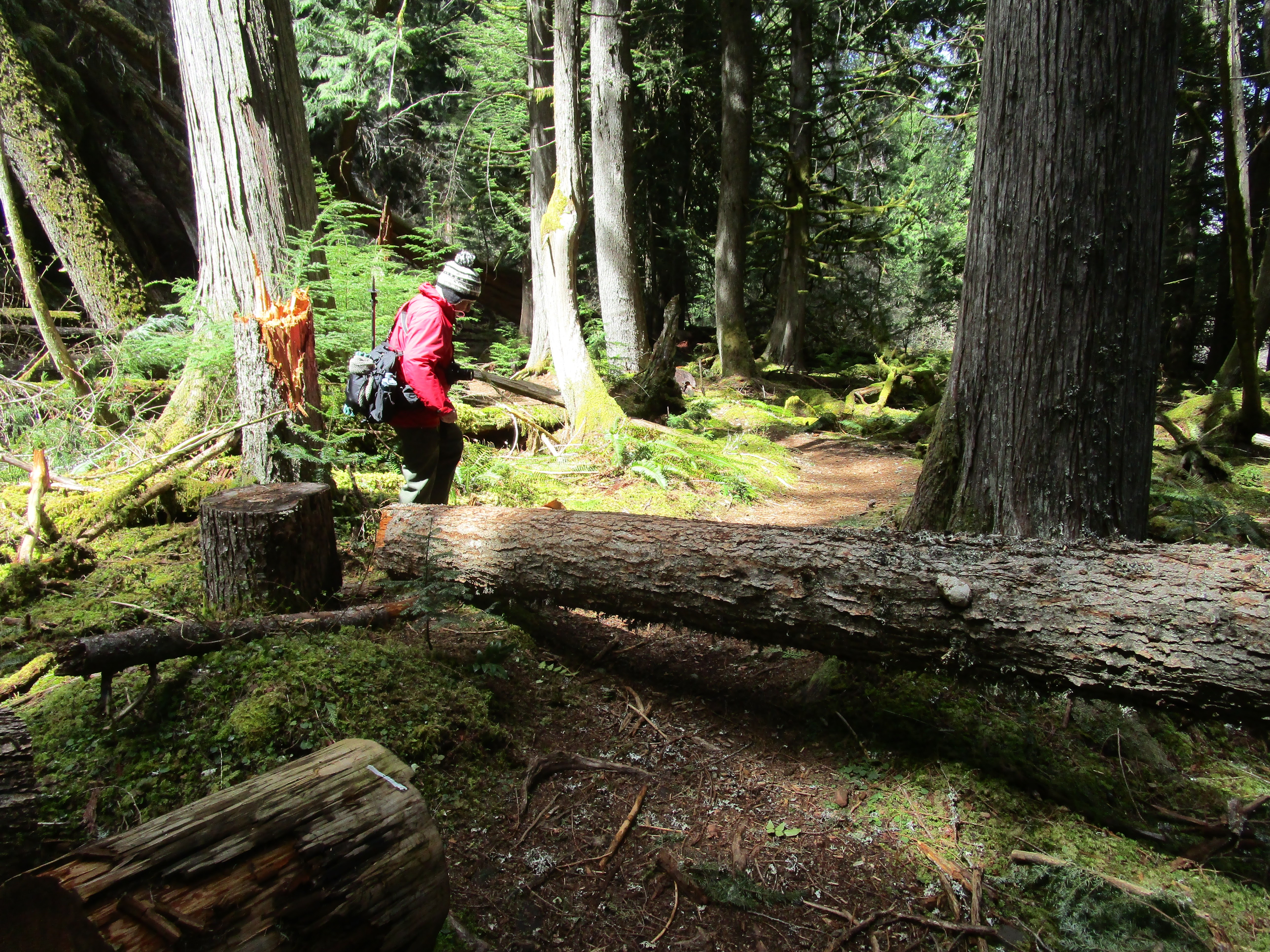
Skookum Falls are just outside the boundary of the Mt. Rainier National Park.  The Forest Service/National Park Pass is required.  We have been on this hike a couple of times previously.  This time we noticed a lot more downed trees along the trail.  Many of the trees had broken off about 20 ft up and others had wedged into adjacent trees.


The trail runs along the White River before entering the forest.  Although the trail goes beyond the falls we stopped at the falls for a snack before heading back to the car.  It was 4.5 miles RT with an elevation gain of about 300 ft.  The rangers or trail crews had been busy cutting and removing things that were obstructing the trail.  Only in one place did we have to walk around a downed tree.


Trillium
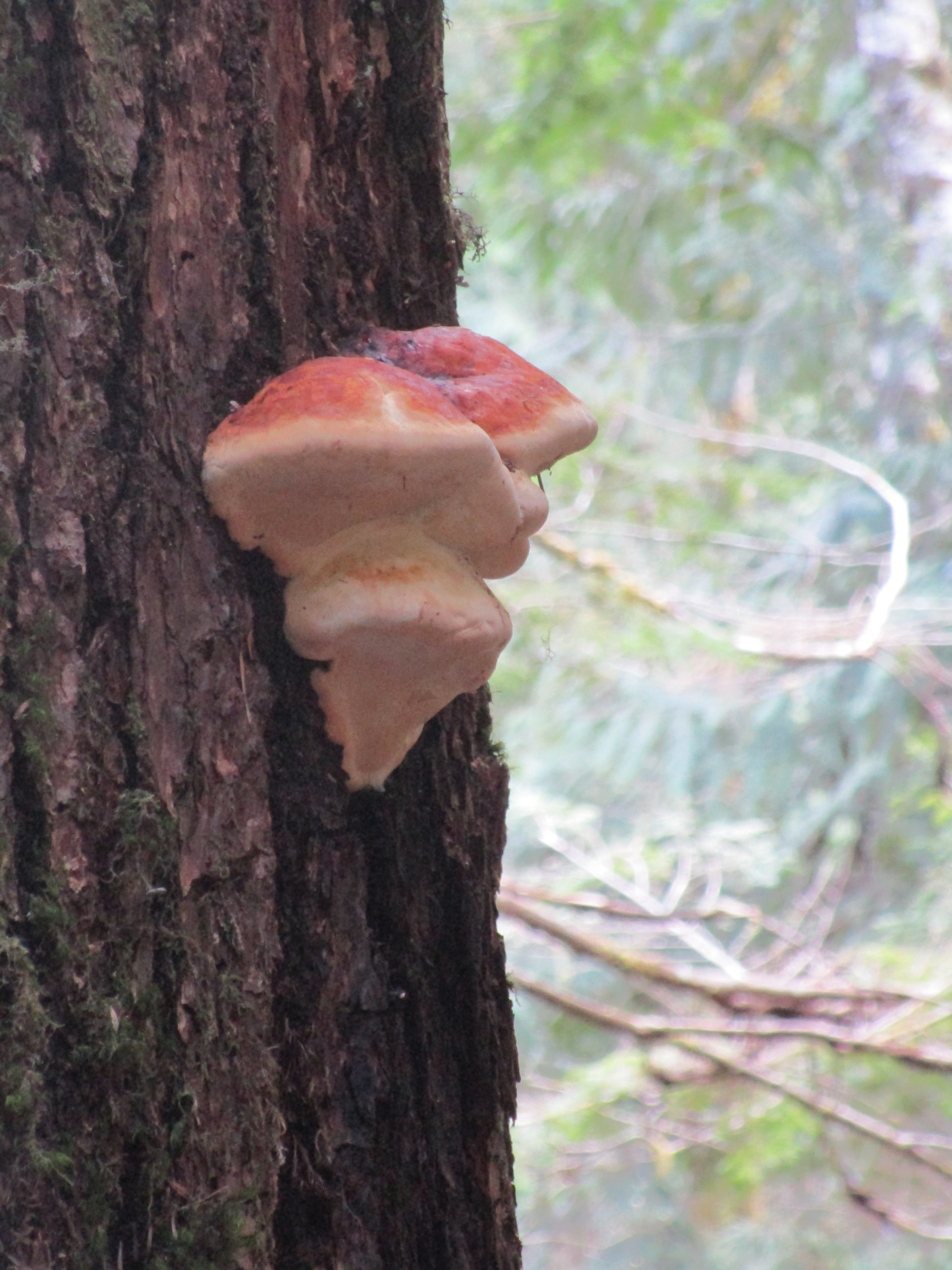


Conk


Skunk Cabbage


Yellow Stream Violet


The weather has still been cooler than usual and there were not as many things blooming as we had hoped for.  


 Elk watching me


Elk crossing the river


The most exciting event of the day was an encounter with a small herd of elk.  We heard a branch snap and looked around to see if one was falling close by.  Then through the bare branches we saw elk near the river’s edge.  They were most likely aware of us before we saw them.  There were 6 females and two males.  The dominant male was wearing a bright green tracking collar.  Hence, a biologist somewhere knows where he is and where his little group is.  Bob wanted to get closer to get pictures without all the branches in the way and inched carefully forward while I stayed quiet behind the bushes.  The elk were wary but not overly worried until he got too close for their comfort.  They started walking out into the river.  When Bob got closer, they quickly went the rest of the way over.  The leader stood on the highest spot on the far bank and watched us while the others regrouped.  Finally, he turned and headed into the woods on the other side of the river and the rest of herd turned and followed him. 

Our turn around spot included this splendid view of Skookum Falls
 

Totals for the day:


6 adult hikers, one infant, and one toddler, no dogs, 8 elk


Thursday, May 12, 2022

If this is Thursday it must be postcards, 555


Eneret postcard, ca 1900


Norwegian Constitution Day is next week on the 17th of May.  Recently I found some cards with reproductions of early 1900 Norwegian postcards at the Scandinavian Specialties shop in Ballard.  Today I am sharing two of the cards.  They show young women wearing the national folk costume, called a bunad, from their area of Norway.  There were 8 cards in the packet.  Unfortunately, none of the areas that the costumes represent were identified on the cards.  


The card above has Eneret, J. F. written at the bottom between the dog and the hem of the skirt.  Eneret joined with Mittet to become the Eneret & Mittet, Co., that published postcards from 1905 to 1925.   Since this card is only identified as Eneret it most likely means it was printed before the merge with Mittet.  The card is titled:  "Calling Them Home.” The card below shows two girls and is titled “He Loves Me, He Loves Me Not.” It is not identified as Eneret or Eneret & Mittet but is part of the set; therefore, I have estimated the date as about 1905.


Two Norwegian girls, ca 1905


Traditional rural folk clothing in Norway is mostly dated to the 18th and 19th centuries.  The name bunad (singular) and bunader or bunadar (pural) appears in the early 20th century.  These folk costumes are traditionally worn for special events, such as the 17th of May celebrations, graduations, confirmation, and weddings. 


The earlier folk costumes have been replaced by a more modern bunad that was redesigned for beauty and fashion.  Hulda Garborg (1862-1934) was a Norwegian writer, novelist, playwright, poet, folk dancer and theater instructor.  She is best known today for kindling interest in the bunad tradition.  It is from her that we get the name bunad associated with these updated folk costumes.  There are strict standards for sewing and wearing a bunad.  It can take a year to complete one with the cost for having a bunad made today ranging from $2,000 to $10,000.  Traditionally, a bunad may be gifted to a young person when he or she is confirmed in the Lutheran Church.


Hip, Hip Hurra!  Syttende mai 


For additional information, see:

https://en.wikipedia.org/wiki/Bunad

https://en.wikipedia.org/wiki/Hulda_Garborg

https://www.scanspecialties.com/


Monday, May 9, 2022

Rhododendron Species Botanical Garden, 2022


This is a garden we have been wanting to visit for a while now.  It is located on the former Weyerhauser property near Federal Way.  Free parking is available in a separate lot about one block away from the entrance into the garden. 


A path from the parking lot winds between trees and crosses the main street into the garden area.  There is a modest admission fee with discounts for seniors, students, and free entry for active or retired military, and children under age 12.  Admission fees are collected at the small visitor center/gift shop where one can pick up free pamphlets, a map showing the various trails in the garden, and other items.  There is also a clean, modern restroom with a changing table for infants. 


Inside the Bonsai enclosed space


In addition to the outdoor garden there is also an enclosed space with examples of bonsai trees.  The Pacific Rim Bonsai Collection, which we did not visit this time, is adjacent to the indoor bonsai exhibit.  Most of the garden is outdoors; however, the other enclosed area is the Rutherford Conservatory.  It is filled with plants, some with wonderful scents.  An unexpected plus was an area with plant sales.  Next time we will be more prepared with a list of things we might like to add to our own garden.


 Much of the garden looks like a forest with paths and beautiful flowering plants all along the way


 The pond


The outdoor garden is not exclusively Rhododendrons but contains many different plants, some native and some exotic.  Here are some of the things we saw the day we visited the garden.  Not all the plants were labeled but most were Rhododendrons.  This is a garden continually in motion, things moving, new things being planted, and areas evolving.  The day we visited we took one of the lesser used paths and found a gardener busy at work.  He was kind enough to talk with us and answer some questions.


This plant looked like Snow Bells but ours had finished their bloom a long while ago so we are not sure if this is the same or not.


A Giant White Trillium.  It is native to the Northwest but we have never seen it in the wild.


Star Magnolia just beginning the bloom


Magnolia

Very large, each flower was hand-size, rhododendron plant in the conservatory


For additional information, see:


www.RhodyGarden.org


Saturday, May 7, 2022

Washington Park, Anacortes, 2022


 Bob in the meadow


The Happy Hikers group traditionally has their Spring Fling in April at Washington Park in Anacortes.  This is a hike, or more like a walk in the park, with a potluck lunch at noon in a picnic shelter on the beach.  Due to concerns about COVID we missed the event in 2020 and 2021.  This year 28 people attended.  There was a nice walk in the woods and plenty of food and good company for the lunch.  Sometimes we see eagles here, but not this time.  Instead, we had several ospreys flying overhead.  This is an ideal place to see fawn lilies and calypso orchids.  There are chocolate lilies in secret places and shooting stars along the bluff in the meadow.  


Shooting Stars


Calypso Orchids


Coral Root just coming up


Fawn Lily


Yellow Monkey Flower


Sea Gull sitting pretty

Too many people and dogs to count this day.

Thursday, May 5, 2022

Goose Rock, 2022


This is another 2-mile loop hike with one steep climb going up, whether you start on the Perimeter trail or the Goose Rock summit trail.  It is good hike to do at the beginning of hiking season to help get in shape.  It has about a 500-foot elevation gain.  We prefer to climb the steeper, shorter route at the beginning and therefore take the Goose Rock summit trail to the top.  That allows us to take our time coming down on the other side.  Taking the loop in that order makes the downward trail, which is longer and more challenging, a slower trip.  Trekking poles can be helpful when going down this side as there are some tricky switchbacks, plus narrow, rocky and steep areas.  The reward is views of water and mountains as well as patches of wildflowers and a glen of native rhododendrons.  Unfortunately, we were too early to see the rhodies in bloom. 


Views from the top of Goose Rock


This is in Deception Pass State Park and a very popular place.  It has restrooms, a parking area and requires a Discover Pass.  To get to the trails, go down the stairs, turn right, go under the bridge to the trailheads for Perimeter and Goose Rock.  To access the beach, turn left at the foot of the stairs and continue downward.


We dubbed the backside of Goose Rock “Flower Rock” since it is where some marvelous finds grow.  This time we found Chocolate Lilies, Naked Broomrape (hard to find and a somewhat rare), Spring Gold, Pink Sea Blush, Blue-eyed Mary, Death Camus, Camus, Indian Paintbrush, and Stonecrop.  The wildlife moment for the day was hearing eagles calling and looking up to see one flying overhead. 


Spring Gold and Pink Sea Blush

Kninickkinnick

Blue-eyed Mary, very, very tiny this is magnified


Stonecrop


Side view of the Naked Broomrape
 
 
Face view of the Naked Broomrape


Chocolate Lily


Death Camus, not yet fully open


Indian Paintbrush


Camus, almost open


Field Chickweed


We must really be back to hiking mode as we are counting hikers and dogs again--

totals for the day:

45 hikers and 4 dogs